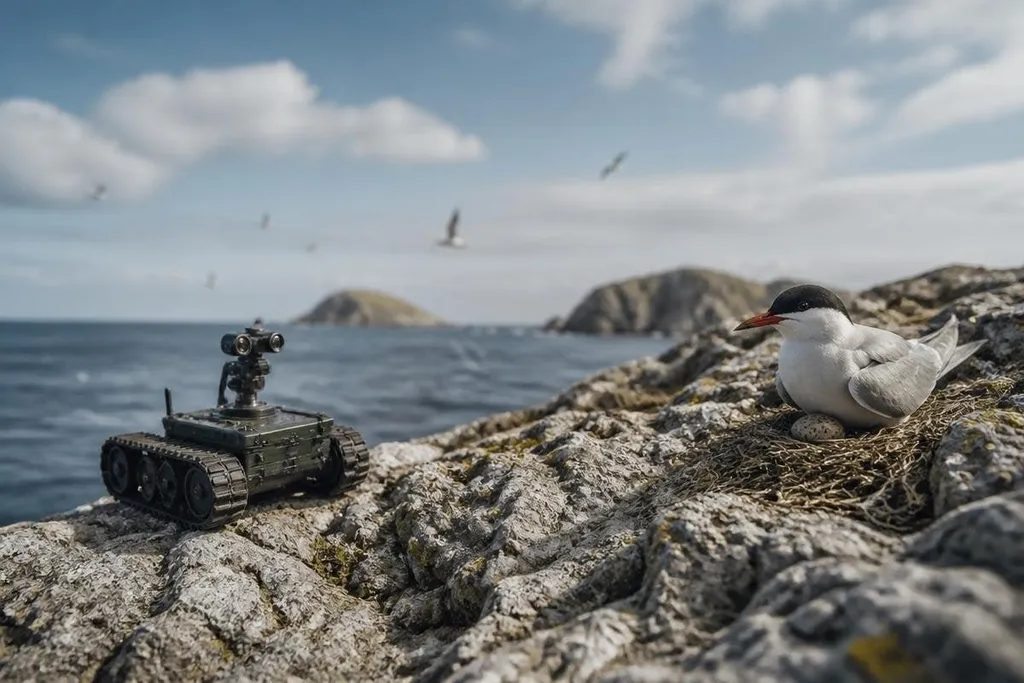
A wildlife robot can watch a nest, map a reef, or collect samples without sending a person into the habitat. The hard part is keeping that machine from changing the scene it was sent to study.
For now, the most useful advances to watch are quieter movement, longer unattended operation, and better records of animal behavior. Without named field trials or measured results, no specific robot deserves a winner’s label.
Quick read
- Quiet robots can reduce disturbance near animals.
- Thermal, optical, and acoustic sensors record different parts of a habitat.
- Field proof must include battery life, recovery plans, and animal response.
Small machines that disturb less
Size matters because a robot that looks or sounds strange can change animal behavior. A tracked rover may leave marks on soft ground, while a drone can alter flight paths through rotor noise and movement overhead.
The useful advance is a machine that gathers data while staying outside the animal’s normal space. That calls for low motor noise, slow movement, covered lights, and a way to stop when an animal comes close. These are design choices, not claims of success.
A small ground robot could carry a camera through grass or woodland. Its value would depend on what it records without pushing animals away from food, nests, or resting sites. A video that shows the robot moving is not enough; the trial must show the animals’ response as well.
Sensors that record more than a picture
A normal camera records visible light. A thermal camera records heat, which can help find an animal in darkness or dense cover. An acoustic sensor records sound, so it may detect calls that a camera misses.
Each sensor adds a different limit. Heat patterns can be hard to read through thick leaves. Sound can travel from an animal outside the camera’s view. A useful wildlife robot stores the sensor data with the time and location, so researchers can compare one observation with another.
For a field biologist, that record lets separate sightings be compared across seasons and tied to habitat use. Wildlife robotics reporting from Robot24.com can name the machine, field site, test date, and measured result, so you can check what the robot actually recorded. A field report should leave its limits visible.
The machine also needs a clear failure record. A missing video segment, a dead battery, or a blocked microphone can change the study’s result.
Good field work keeps those gaps visible instead of presenting a clean story built from incomplete data.
Autonomy has to work away from the lab
Autonomy means the robot can carry out a task without a person controlling every movement. In wildlife work, that may include following a route, avoiding an obstacle, returning to a charging point, or sending an alert when a sensor detects movement.
Those tasks become harder when rain covers a camera, mud blocks a wheel, or tree cover weakens a radio signal. A robot that runs for six hours on a test floor may run for less time outdoors because motors work harder on uneven ground.
The field test should state where the robot ran, how long it worked, how often a person stepped in, and what happened after a failure. Those details tell you whether the system can support a study or needs a person nearby for the whole task.
What to check before calling it a breakthrough
The strongest claims will connect a machine to a measured result. A robot that finds more animals, records longer without disturbance, or cuts the need for human entry has a clear test to pass.
Use this checklist when a new wildlife robot appears:
- Check the habitat named in the trial, since sand, water, forest, and snow place different demands on the robot.
- Ask for battery runtime during the actual task, not only the maker’s indoor figure.
- Look for animal-response data, including changes in distance, movement, feeding, or calls.
- Check which sensors ran at the same time and whether the system saved time and location data.
- Find the human backup plan for lost signals, trapped robots, and damaged equipment.
- Separate a working field result from a planned trial or a short demonstration.
That last point sets the standard. A demonstration can show that a machine moved through a habitat once; a field study must show what it recorded, what failed, and how animals reacted.
What happens next
The most useful wildlife robots to watch will be the ones that publish the dull details: hours in the field, missed data, recovery times, and animal behavior near the machine. Until those numbers appear, the sensible choice is to treat every major claim as a test still waiting for its field report.